
On the brink.
Preseason 3: A Burnley XI and Salop’s League Two prospects.

Salop supporters of a nervous disposition may wish to scroll down this article and start at the point marked **CATCH US IF YOU CAN**.
One little piece of preseason excitement I usually enjoy, is the curiosity involved with seeing how the pundits believe Town will perform in an upcoming season. Well, the highest predicted finish I have seen thus far from the experts is twentieth. Before the Salopian fanbase melts down into the kind of screaming panic depicted in a 1950’s Hollywood B Movie that features a monstrous reptile devouring the centre of New York City, this is based on a low sample size (three surveys). Indeed, one pundit is predicting a much higher finish in the September issue of When Saturday Comes; I know this for certain because I am that pundit.
Around the time Salop were last in the fourth division it seemed the received wisdom appeared to be that most clubs relegated the previous season would have a realistic chance of competing for an immediate return to the third tier. Indeed, Mickey Mellon’s Salop team successfully managed a bounce back promotion in 2014-15. Times have changed, though. In the Not The Top 20 podcast’s League Two predictions much of was made of one statistic: ten of the last twelve sides relegated from League One finished in the bottom half of League Two the following season. Now this is probably not the killer fact that it seems on the surface. Four teams are relegated from League One each year – so the sample only extends to the three seasons since 2021-22, these clubs being: Gillingham, Doncaster Rovers, AFC Wimbledon, Crewe Alexandra, the Franchise that must not be named, Morecambe, Accrington Stanley, Forest Green Rovers, Cheltenham Town, Fleetwood Town, Port Vale, Carlisle United.
Readers will have their own views about the relative strengths of these twelve clubs, but the one thing that strikes me is that the majority appear to be clubs that can be reasonably, and respectfully, said to be doing well to be competing at League One level. It is also interesting to note that while three of the clubs (Forest Green Rovers, Morecambe and Carlisle United) are no longer in the EFL, the same number has been promoted back to League One (Doncaster Rovers, AFC Wimbledon and Port Vale – who did it at the first attempt).
**CATCH US IF YOU CAN**
As Salop stand on the brink of a new season, it is with a real uncertainty about the prospects of what lie ahead. In the ten seasons the club as been away from this level things have certainly changed, with the division now being a mixture of well-resourced ambitious clubs and those who will view success as merely staying at this level. So, what lies in store for Town, who probably fall in the indeterminate territory between these two groups of clubs. At the fans’ Q&A session on the club’s open day, Michael Appleton stuck with his admirable practice of not making any promises; indeed, his view that the shape of a season will only become apparent after at least ten matches have been played, was the reason for his unwillingness to be drawn into making any predictions either.
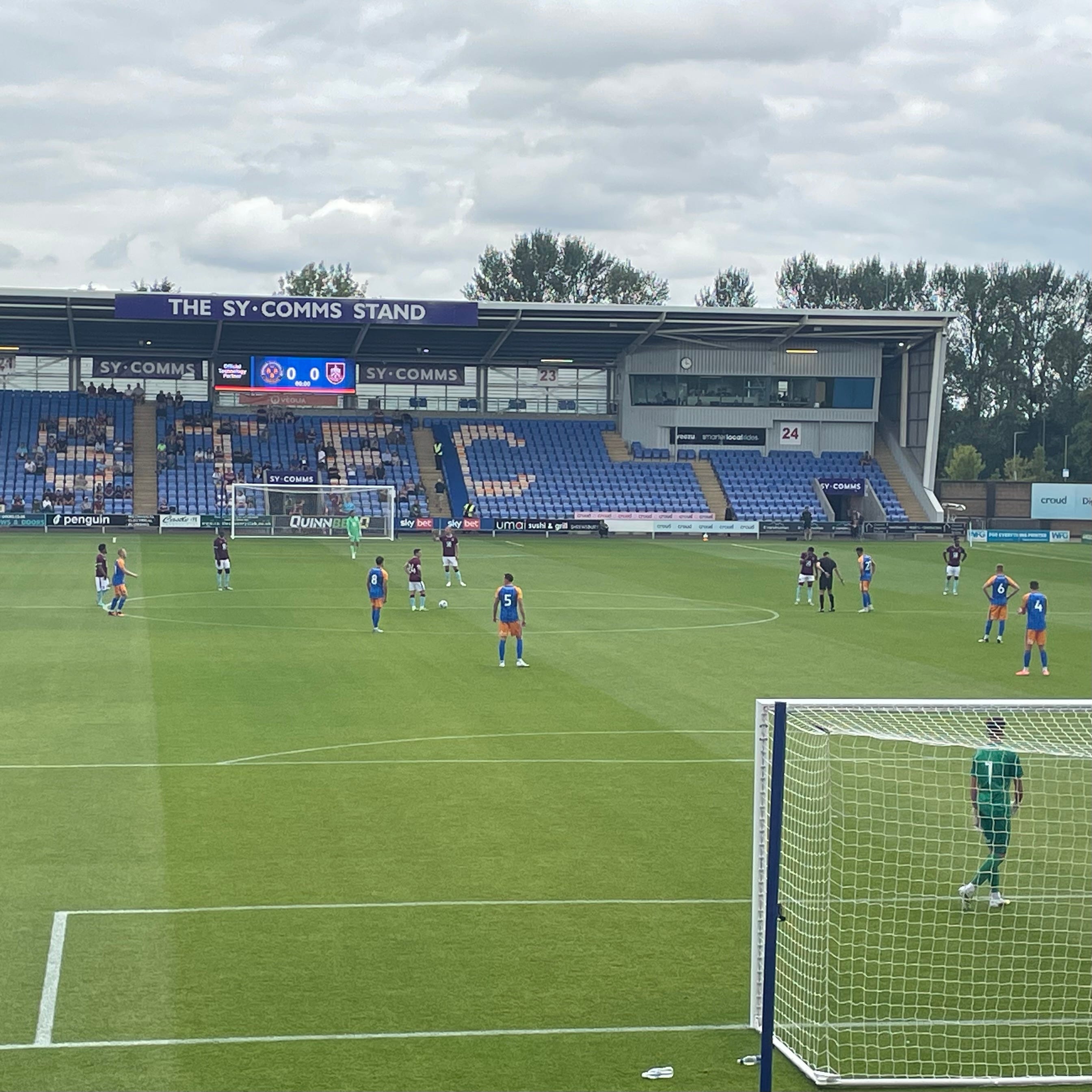
Salop’s preseason, rounded off with a match against a Burnley XI, has not really provided much illumination on the prospects for this coming season. (After summer 2024 produced unsustainable optimism, Town fans have started to see July as the unreliable month.) It seems to me that traditional preseason preparations have been diminished due to the staggered starting dates for the leagues; teams in Leagues One and Two, the Championship and the Premier league are all at different points in their preparations, so their approach to friendly fixtures are subtly different. For example, Salop’s match against Burnley was the host’s final preseason match, whilst for the visitors it was more about giving their players a run out. That another Burnley XI was simultaneously playing a match at Huddersfield Town with their Head Coach Scott Parker in attendance, indicated the importance of this friendly.
Salop’s starting line-up against Burnley:
Harrison [Savin 46'], Hoole, Anderson [Nsiala 74'], Boyle, Clucas, Biggins [Perry 81'], Scully [Stewart 74'], Gilliead, Nurse [Benning 81'], Stubbs and Marquis, with Lloyd, Gray, England and Loughran running up and down the touch line as unused substitutes.
This selection may or may not offer indicators for the team that is fielded against Bromley. It seems inked in that the experienced players in this lineup who were acquired over the summer will, barring injury, start. This includes latest signing, the 26-year-old winger Anthony Scully, who has an old-school appearance reminiscent of the depiction of a league footballer on a 1930’s cigarette card. He was slotted into the eleven as support for John Marquis upfront. It does appear that three centre backs will be the back line and with Nurse being preferred to Benning as wing-back appears significant. The 3-5-2 formation mooted on the return to training looks to have been cemented over preseason.
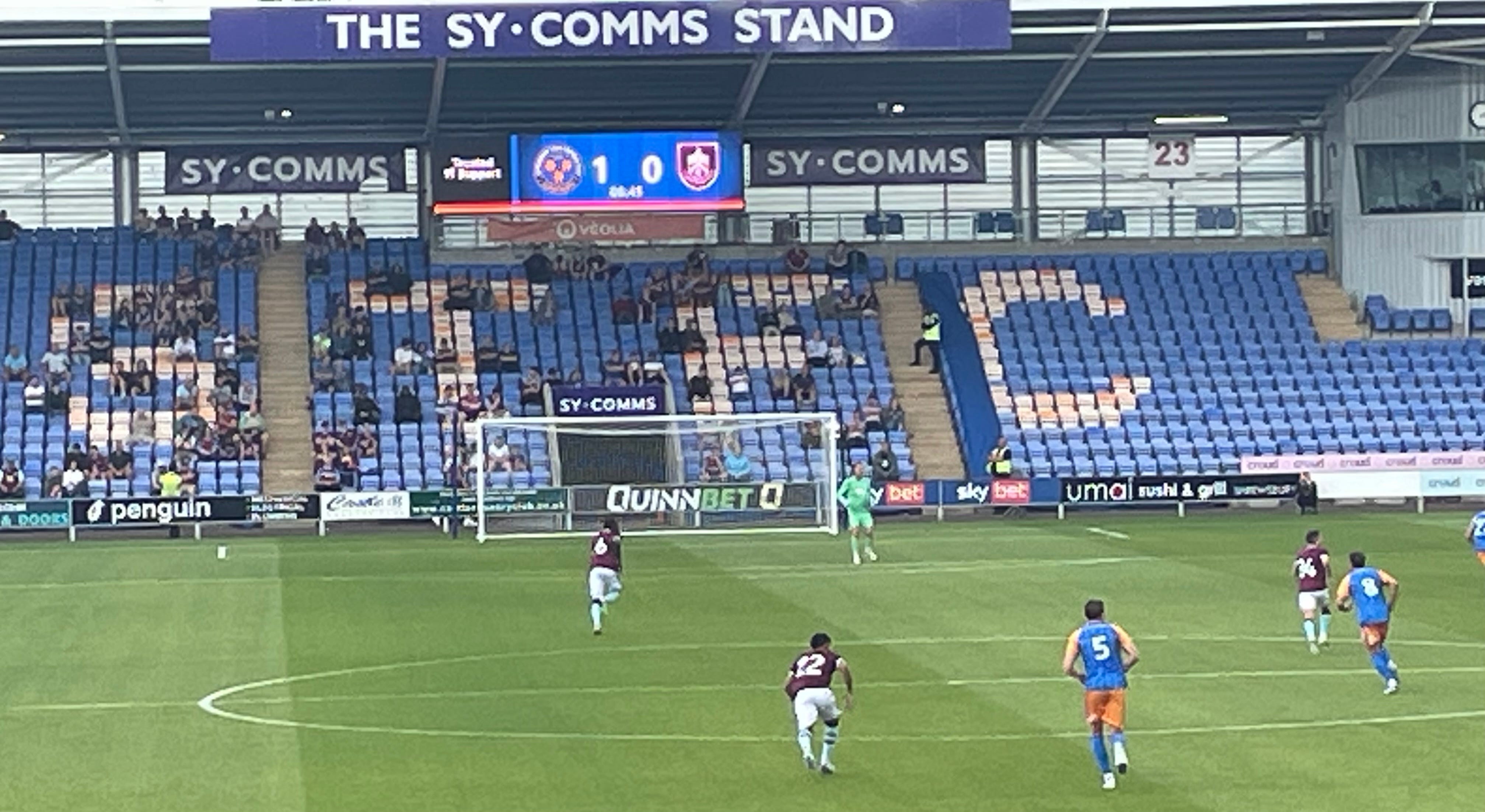
Burnley’s team was a mixture of seasoned quality players and younger players likely to become quality players soon. They demonstrated a clear technical superiority in passing the ball and moving off it. It was a great credit to the Salop defence that they protected a 1-0 first half lead that had been established by a John Marquis goal in the seventh minute. Burnley’s attacks were squeezed in the final third and the visitor’s superiority in possession did not produce many clear-cut chances, although the visitors would have been disappointed not to have taken any of their opportunities.
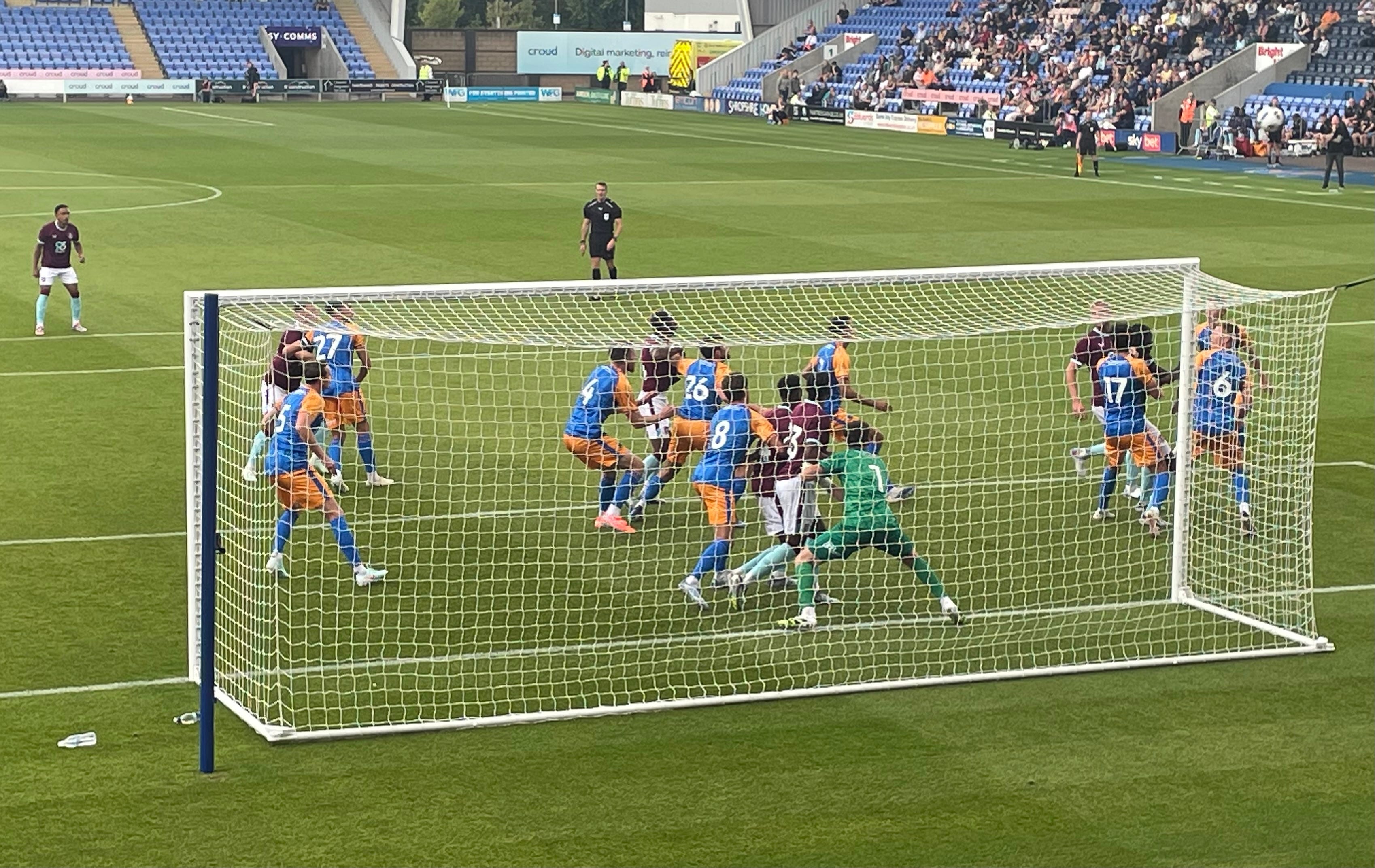
The second half re-established the natural order. The impressive looking Elyh Harrison had suffered a knock making a clearance first half and Toby Savin replaced him after the break. Burnley equalised from a free-kick and then took the lead when awarded a penalty, Marcus Edwards scoring on both occasions. That seemed to be that for the home side, but the last ten minutes saw them mount a spirted attempt to pully back the game, forcing a succession of corners. Will Boyle’s last minute headed equaliser was a just reward for his, and the team’s, efforts.
With preseason now at an end our attentions will be firmly fixed on the season proper. The Not The Top 20’s league two preview is well worth a listen, even if Salop are predicted to finish twenty-second, as if offers a good insight into what to expect in this year’s League Two. Co-presenter George Elek, an Oxford supporter who has a high regard for Michael Appleton, gives four broad reasons why he is pessimistic about Salop’s chances. Firstly, Roland Wycherley’s desire to sell the club indicates that the owner is now unwilling or unable to fund the club; secondly, that while good efforts have been made to strengthen Salop’s defence by signing proven centre backs, the forward line remains the same as last year and still looks short of goals; thirdly, Appleton is a good manager but his previous successes at this level has been based on making shrewd loans from elite clubs and there has been a complete absence of this type of signings thus far; and finally, it is now firmly established that clubs can enter a doom spiral which can see them suffer back to back relegations and Town could well be in such a spiral.
To finish on an upbeat note, here is an alternative perspective. While acknowledging the issues and concerns regarding ownership, Shrewsbury Town are not a financial basket case. To finish in or near the relegation zone the club would have to seriously underperform a budget that I have been told is ‘competitive’ in this division. At the recent Q&A, Appleton was certain in his belief that the club can outperform its budget.
Few supporters would disagree that Salop’s defence has been strengthened over the summer and should hold firm at this level. However, the criticism that midfield creativity and goal scoring potential is not markedly better than last season does have some substance. The effectiveness of midfield will much depend on newcomers Sam Clucas, Tom Sang and Anthony Scully making a positive impact. All the strikers were under contract at the end of last season, with no new additions. However, two of them – Max Mata and Callum Stewart – are unknown quantities at this level and could break through this season. (Mata returned action looking fresh, but a hamstring injury is likely to keep him out of contention until the autumn.) Last season’s leading League Two striker with 25 goals was Bromley’s Michael Cheek, a 33-year-old who had not played in the EFL before, simultaneously offering hope to novice and veteran alike.
Town have so far only made one of their permitted loan signings – Elyh Harrison – and further loans could be recruited. Appleton has said that the better prospects tend to become available for loan towards the end of the transfer window, so there is still scope for the head coach to call on his expertise in the loan market.
So, there is good cause to suggest that predictions of Salop’s demise might be exaggerated. Although as ever, football is driven by results, and we are on the brink of the first round of League Two fixtures.